TL;DR:
Every year between April and November, cruise ships drop hundreds of thousands of passengers into downtown Halifax with a few hours to spare and a phone already in hand. Whether they walk into your shop or the one next door usually comes down to your Google Business Profile and your map pack ranking, not your homepage design. This post covers what actually gets a Halifax business found during cruise season, plus how to get a free audit before the ships start arriving.
Somewhere around Pier 22, a cruise ship has just tied up. A family of four is walking down the gangway with about four hours before their all-aboard call. They don’t have a guidebook. They have a phone, an appetite, and no idea what’s good downtown.
This happens close to 200 times a year in Halifax, and it’s one of the few genuinely predictable tourism spikes a Nova Scotia small business gets all season. The problem is most Halifax businesses treat cruise season like any other Tuesday: hope someone wanders past the window. But cruise passengers don’t wander much. They search. They stand on the waterfront, pull out a phone, and type something like “coffee near me” or “gifts near cruise terminal Halifax.” If your business doesn’t show up in that search, at that exact moment, there’s no second chance before the ship pulls away.
The fix has less to do with your website than with your Google Business Profile and local search setup, and both are fixable before the next ship arrives.
How Many Cruise Ship Passengers Actually Come to Halifax Each Season?
Halifax’s 2026 cruise season runs from April 7 through November 5, and the Port of Halifax handles somewhere around 200 ship calls a year. Each call can bring anywhere from a few hundred to several thousand passengers ashore, all for a matter of hours, all within walking distance of downtown.
Most of those passengers stick close to the water. The walk from the cruise terminal to downtown Halifax is a scenic 15 to 20 minute stroll along the boardwalk, past the Seaport Farmers’ Market and Pier 21. That’s good news if your business sits somewhere along that route, and a real problem if it doesn’t. A business more than about a 20 minute walk from the Seaport has already lost a big chunk of that traffic before anyone even opens Google.
New cruise lines are adding Halifax stops too. The port’s own numbers show growth in spring and summer sailings, which means this window keeps getting more valuable, not less.
What Do Cruise Passengers Actually Search For on Their Phones?
Cruise passengers don’t Google “things to do in Nova Scotia” once they’re already off the ship. They Google practical, time-bound things: “lunch near cruise terminal,” “gift shop open now,” “coffee near me.” It’s the same instinct we’ve written about with the highway tourist traffic rolling into Truro on the 102. The vehicle is different (boat instead of car), but the decision-making is identical: limited time, unfamiliar city, phone in hand, and a search that needs to answer “is this close, is this open, and is this good” in about three seconds.
That pattern shows up in the data too. Local searches skew heavily mobile, and a large share of “near me” searches turn into an in-person visit within hours, not days. For a passenger with a four hour window, that gap between searching and showing up is even tighter than the broader local search research suggests. If your business isn’t set up to answer that search instantly, the sale goes to whichever competitor is.
Why Does Your Google Business Profile Matter So Much During Cruise Season?
Your Google Business Profile, not your website, is usually the first thing a cruise passenger sees when they search nearby. A complete profile with current hours, real photos, and an address that actually matches where you are makes people far more likely to trust the listing and follow through with a visit.
This isn’t a small effect. Research on local search behaviour shows a complete Google Business Profile makes customers roughly 2.7 times more likely to see a business as reputable, and about 70% more likely to actually visit. Photos matter specifically too. Profiles that include current, real photos of the storefront and products get 42% more direction requests than ones that don’t. For a business relying on foot traffic from a stranger who’s never been to Halifax before, that’s the difference between a stop and a scroll past.
If your listing still shows winter hours in July, or a photo from three renovations ago, that’s costing you customers who are standing two blocks away right now. A Halifax website designer who understands local search can usually spot and fix these gaps in an afternoon.
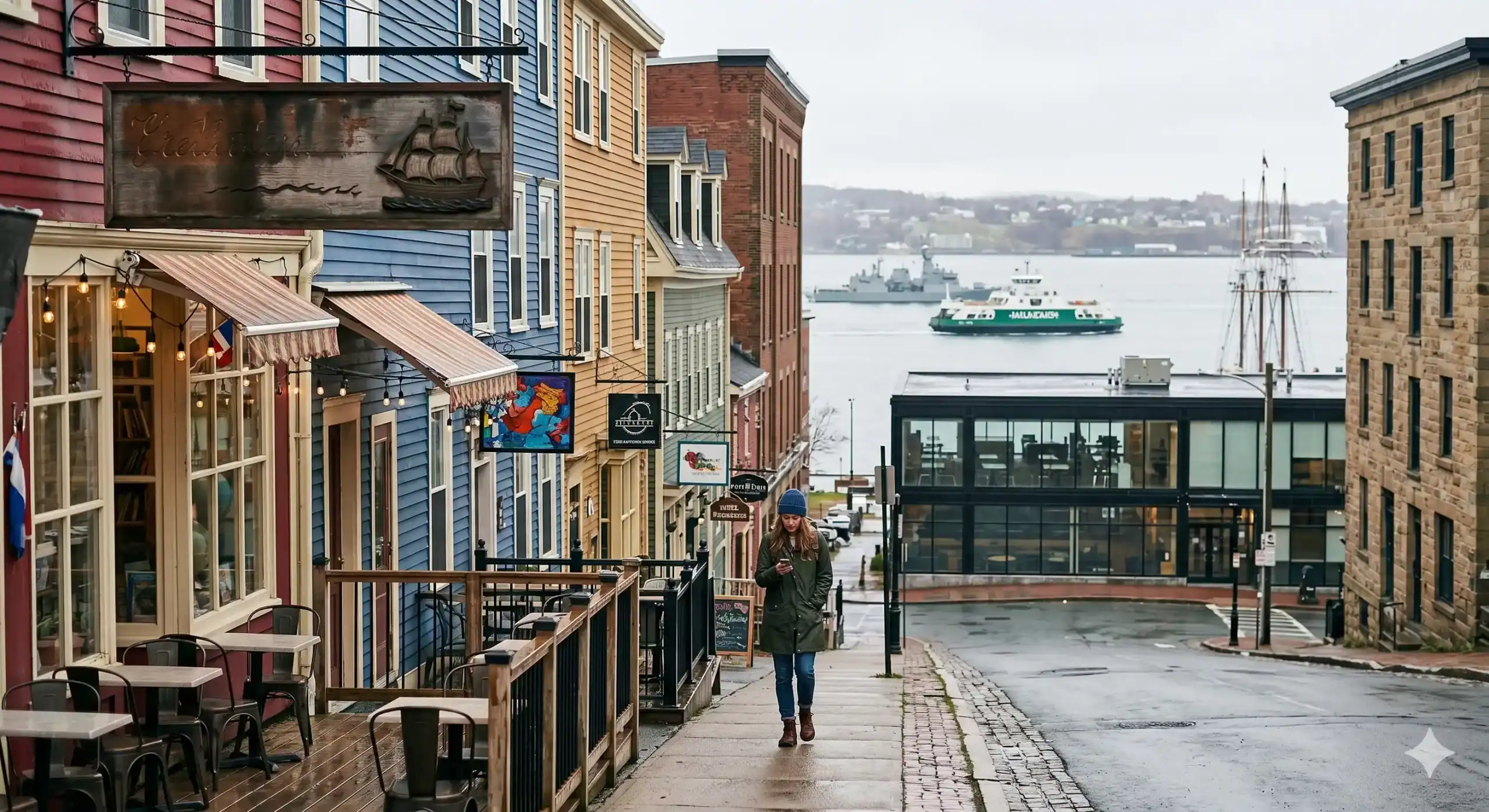
How Do You Show Up in Halifax’s Google Map Pack?
The map pack (the three business listings with the map above the regular search results) is where most cruise passengers will actually find you. Google ranks those three spots on relevance, distance, and how established the business appears online, and businesses that make it into that top group see dramatically more traffic than everyone else on the page.
The numbers back this up. Listings in the map pack get 126% more traffic and 93% more calls, clicks, and direction requests than businesses ranked just below them. During a slow week in February, that gap matters. During a Tuesday in August when three ships are in port, it’s the entire game.
There’s no shortcut to the map pack, but there is a clear list of what moves the needle: accurate categories, consistent contact information across the web, recent reviews, and content on your site that actually mentions your neighbourhood by name. We’ve gone deeper into the mechanics of showing up on Google if you want the full breakdown.
Will AI Overviews and ChatGPT Answer for Your Business Instead of You?
More local searches are now getting answered before a passenger ever scrolls to a website at all. Google’s AI Overviews have grown from a small share of local searches to a much larger one over the past year, and some data now puts them appearing on more than half of all local search results. That means the AI-generated summary at the top of the page, not your website, is often what a cruise passenger reads first.
This is exactly the shift we cover in our piece on zero-click AI search and why traditional keyword-chasing SEO isn’t enough anymore. For cruise season specifically, it means your business information needs to be accurate and consistent everywhere online, not just on your own site, because that’s the raw material these AI answers pull from.
A Pre-Season Checklist for Halifax Businesses
Before the next ship ties up, run through this list:
- Update your hours. Summer hours that still show as winter hours (or vice versa) turn away people standing outside your door.
- Add real, current photos. A recent photo of your actual storefront and products beats a stock image every time.
- Check your name, address, and phone number everywhere. If your listing on Google doesn’t match your listing on TripAdvisor or Facebook, that inconsistency quietly hurts your ranking.
- Ask happy customers for a review on the spot. A steady trickle of recent reviews matters more than a big pile of old ones.
- Test your site on a phone, standing outside, on cellular data. If it’s slow, a passenger with limited time and patience will bounce to the next result.
- Make sure your site actually says where you are. “Halifax” and your neighbourhood name should appear in plain language, not just buried in an address field.
If your current site can’t handle that last one, it might be worth a proper look. Our Halifax web design services are built with exactly this kind of local visibility in mind, not just a nice-looking homepage.
Get Ready Before the Next Ship Arrives
Cruise season gives Halifax businesses a predictable, recurring shot at new customers, but only the ones a passenger can actually find in the thirty seconds they spend searching. That comes down to a complete Google Business Profile, a map pack presence, and a website that backs both of those up instead of quietly working against them.
You don’t have to guess where your gaps are. Get a free website and SEO audit and we’ll show you exactly what’s costing you visits before the next ship pulls up to the dock.
Stop missing the boat
Find out how you’re website can help you show up to cruise ship tourists in Halifax.
Frequently Asked Questions
How do I get my Halifax business to show up when cruise passengers search nearby? Start with your Google Business Profile: accurate hours, real photos, and a matching address and phone number across the web. From there, ranking in the map pack comes down to relevance, distance, and how established your listing looks compared to nearby competitors.
What is a Google Business Profile and why does it matter for cruise season? It’s the free listing that shows up in Google Search and Maps with your hours, photos, reviews, and location. For a passenger with a few hours in an unfamiliar city, it’s often the only thing they see before deciding whether to walk your way.
Do cruise ship passengers really search Google, or do they just walk around downtown? Both happen, but most passengers still check their phones first, especially for anything beyond what’s directly on the waterfront. Local mobile searches convert to an in-person visit at a very high rate, and a passenger on a tight schedule is even less likely to wander in blind.
How far will cruise passengers travel from the port to visit a business? Most stay within a comfortable walk of the Seaport, generally 15 to 20 minutes along the boardwalk into downtown. Businesses further out can still capture this traffic, but they need to work harder in search to convince someone the extra walk is worth it.
When does the cruise ship season run in Halifax, and when should I prepare? The 2026 season runs from April 7 to November 5. The best time to clean up your Google Business Profile, photos, and hours is a few weeks before the season opens, not after the first ship has already come and